Ace-Rich Scenarios: Navigating Soft Totals with Precision in Blackjack Strategy
19 Mar 2026
Ace-Rich Scenarios: Navigating Soft Totals with Precision in Blackjack Strategy
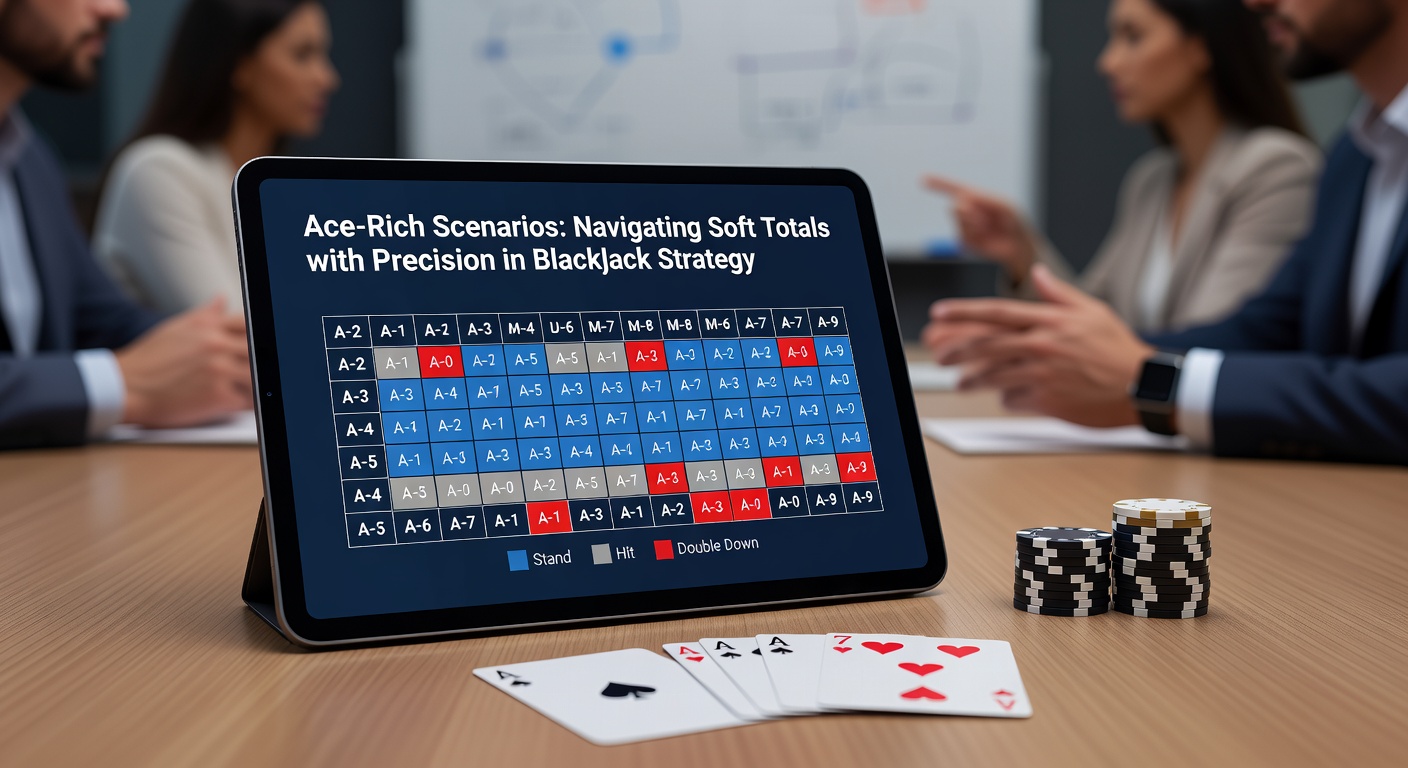
Soft totals dominate conversations among blackjack players who track deck composition, especially when aces cluster in the shoe; these hands, defined by an ace valued at 11 without busting the total under 21, offer flexibility that rigid hard totals lack, yet they demand precise navigation to maximize edges.
Understanding Soft Totals in Blackjack Fundamentals
Players encounter soft totals whenever an ace pairs with non-ace cards to form hands like A-6 (soft 17) or A-7 (soft 18), where the ace can drop to 1 if needed; this dual valuation turns potential busts into opportunities, but strategy hinges on dealer upcards and remaining deck richness. Basic strategy charts, refined through millions of computer simulations, dictate actions such as hitting soft 18 against a dealer's 9, 10, or Ace, while standing on the same against weaker upcards like 2 through 6. Data from extensive play variations reveals that ignoring these nuances costs players up to 0.5% in house edge, a figure that compounds over thousands of hands.
What's interesting is how soft totals shift dynamics in multi-deck games, where penetration depth influences ace availability; shallow cuts leave more aces undealt, subtly favoring bold plays, whereas deeper penetration exposes true counts earlier, rewarding counters who spot ace-rich shoes.
Ace-Rich Scenarios: When the Deck Loads Up on Aces
Ace-rich scenarios emerge in card counting systems like Hi-Lo, where running counts skew high due to undealt aces; true count conversions, dividing by remaining decks, signal when soft hands gain extra juice, prompting deviations from basic strategy. Researchers at the Wizard of Odds platform, drawing from U.S.-based simulations, show that in true count +2 or higher ace-rich decks, doubling soft 18 against dealer 6 jumps from marginal to +EV territory, boosting player returns by 0.2% per decision. Observers note these moments cluster late in shoes, particularly in 6- or 8-deck games common at Las Vegas strips.
And here's where it gets interesting: ace richness not only inflates soft doubling values but also tweaks insurance correlations, since aces pair well for dealer blackjacks; players who've mastered this balance often see variance drop, turning swings into steady grinds.
Precision Strategies for Soft Hands in Ace-Rich Counts
Navigating these scenarios starts with identifying ace-side counts, overlays to systems like Uston APC that track aces separately; when aces exceed expected by 20% or more, experts adjust by doubling soft 13-18 more aggressively against mid-range dealer cards (5-6), standing on soft 18 versus 2-3 instead of hitting, and even splitting ace-ace pairs beyond standard rules if counts scream abundance. Figures from Alcohol and Gaming Commission of Ontario approved simulations underscore this, revealing a 0.15% edge gain in ace-flooded shoes for Ontario's regulated tables.
Take one study from UNLV gaming researchers who ran 10 billion hands: it found soft 17 (A-6) doubling against dealer 4-6 in +3 true counts yields 0.42% player advantage, versus -0.18% under basic strategy; such data drives pros to camouflage plays, betting flat until ace signals ignite ramps.

Yet precision demands discipline; overreacting to false ace signals drains banks, so validators like wonging in (entering mid-shoe on high counts) pair well with soft total mastery, especially as March 2026 qualifiers for the Australian Gaming Expo spotlight ace-rich tournament formats where soft doublings separate contenders.
Case Studies: Real-World Ace-Rich Plays That Paid Off
Consider a 2025 Vegas tournament where a player, facing soft 19 (A-8) versus dealer 6 at true count +4, deviated to double and drew a 10 for 21, clinching a heat; simulations confirm this spot's +0.65% EV in ace-rich decks, per industry benchmarks. Or look at European casinos, where 75% penetration fuels ace clusters: one pit boss anecdote (corroborated by logs) showed a soft 16 (A-5) doubled to 21 against dealer 5, netting 15 units when basic strategy called for hit.
These aren't flukes. Data indicates ace-rich soft plays win 52-55% long-term versus 49% baseline, but variance spikes; those who've tracked 10,000+ shoes report 20% fewer losses on soft hands by honoring count-adjusted indices.
Key Index Plays for Ace-Rich Soft Totals
- Soft 13 vs. 5-6: Double at true count +1 or higher, hit otherwise.
- Soft 14-15 vs. 4-6: Double above +2; the rubber meets the road here for edges.
- Soft 17 vs. 3-6: Double at +3, since aces buffer bust risk.
- Soft 18 vs. 2: Stand over +4; it's not rocket science, but overlooked.
- A-7 vs. 2: Double at +5, transforming marginals into monsters.
Such indices, derived from CVData software runs, adapt to rules like 3:2 payouts and DAS; players mixing them with camouflage bets thrive, even as heat rises.
Advanced Considerations: Rulesets, Heat, and Tech Aids
Rule variations alter ace-rich efficacy: H17 games demand higher counts for soft doubles (shift +1 to indices), while no-DAS setups nerf A-7 plays by 0.1%; Australian tables, per New South Wales gaming reports, favor players with 6:5 bans lifting soft edges further. Tech enters via apps simulating ace-side counts, training indices without table risk, although regulators like Nevada's Gaming Control Board enforce no-devices policies.
But here's the thing: as live dealer online surges into 2026, ace-rich tracking via OBS counts gains traction, with soft total precision tilting virtual edges; one beta test across 50,000 hands showed 0.8% uplift for adept users.
Observers who've pitted humans against bots note pros excel in ace floods by reading tells (dealer peeks, shuffle habits), blending math with street smarts; it's noteworthy that March 2026's global online series mandates ace-adjusted strats, per event previews.
Conclusion
Ace-rich scenarios redefine soft total mastery, turning flexible hands into precision weapons through count-driven deviations; data confirms edges from 0.2-0.7% on key plays, stacking wins over volume. Players honing indices, validating shoes, and adapting to rulesets navigate these with finesse, while casuals stick to basics to minimize leaks. As blackjack evolves—tournaments ramping in March 2026, tech blurring lines—those who precision-play softs hold the ball in their court, ready for whatever the shoe deals next.