Blackjack Rule Variations Across International Casino Markets
Alex Simmons · Jul 9, 2026
Blackjack Rule Variations Across International Casino Markets
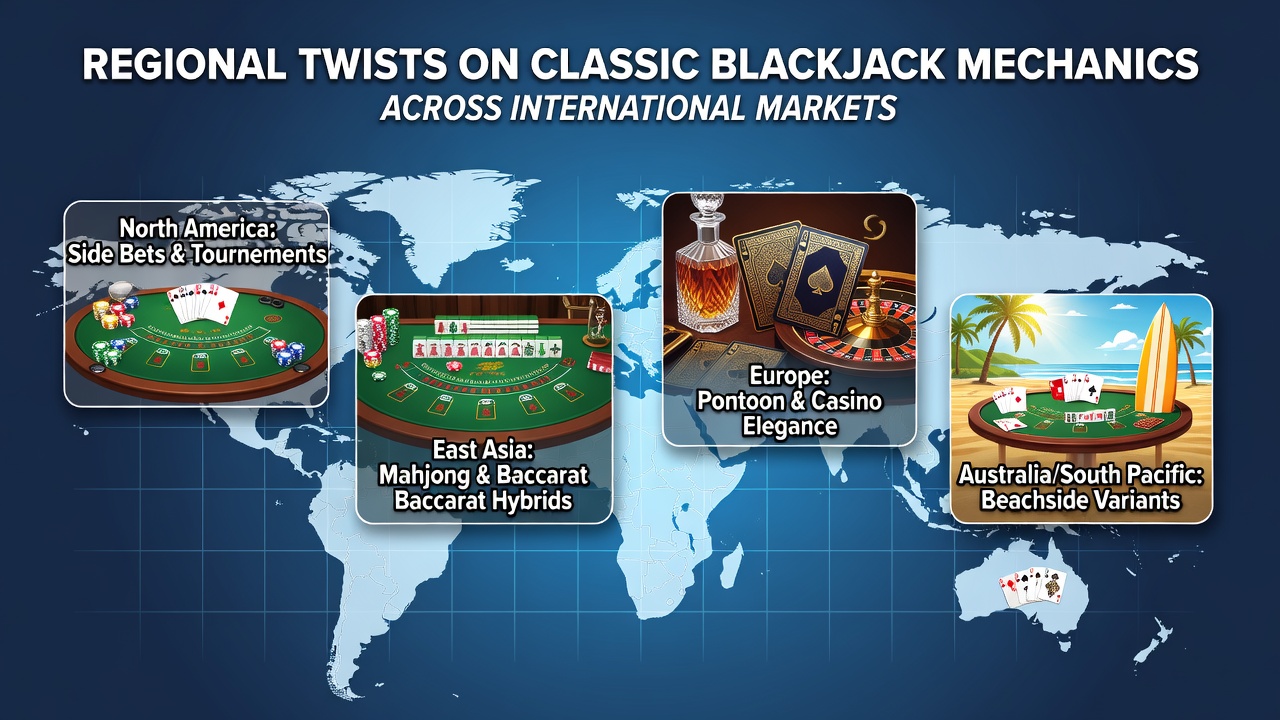
Blackjack mechanics shift in noticeable ways once play moves beyond the standard American format, and these differences emerge most clearly when comparing deck counts, dealer obligations, and player options that operators adopt to match local regulations and player preferences. Markets in North America, Europe, Asia, and Australia each apply distinct adjustments while preserving the core objective of reaching 21 without going over, and observers note that these adaptations influence everything from basic strategy charts to table minimums.
North American Adjustments to Dealer and Deck Rules
Operators in Nevada and Atlantic City typically rely on six or eight decks shuffled together, yet some venues in smaller jurisdictions still offer single-deck or double-deck games that change counting difficulty and payout structures. The Nevada Gaming Control Board tracks these configurations through monthly reports, and data shows that double-deck tables often pay 3-to-2 on natural blackjacks while requiring dealers to stand on soft 17 in many cases. Players encounter early surrender options more frequently in certain New Jersey properties, whereas Las Vegas Strip rules more commonly restrict surrender to late decisions only.
European Market Twists on Doubling and Splitting
European blackjack frequently limits doubling to hard totals of nine, ten, or eleven, and many tables prohibit doubling after splits. French and Dutch casinos enforce a no-hole-card procedure that resolves player hands before checking the dealer for blackjack, which removes certain insurance bets and alters risk calculations. Research from the European Gaming and Betting Association indicates that these constraints reduce the house edge in some variants when players adjust their doubling frequency accordingly, and the same studies document how resplit limits vary from one jurisdiction to another.
Asian and Australian Regional Mechanics
Macau and Singapore properties introduce multi-hand formats and side bets that integrate with local preferences for rapid play, while Australian casinos often feature continuous shuffle machines that limit card counting opportunities. Rules in these regions commonly allow doubling on any two cards and permit resplitting aces, yet they also cap the number of splits at three hands per original pair. A report compiled by the University of Macau gaming research unit found that payout structures for blackjacks remain at 3-to-2 in most monitored venues, although some promotional tables test 6-to-5 payoffs during peak summer periods.
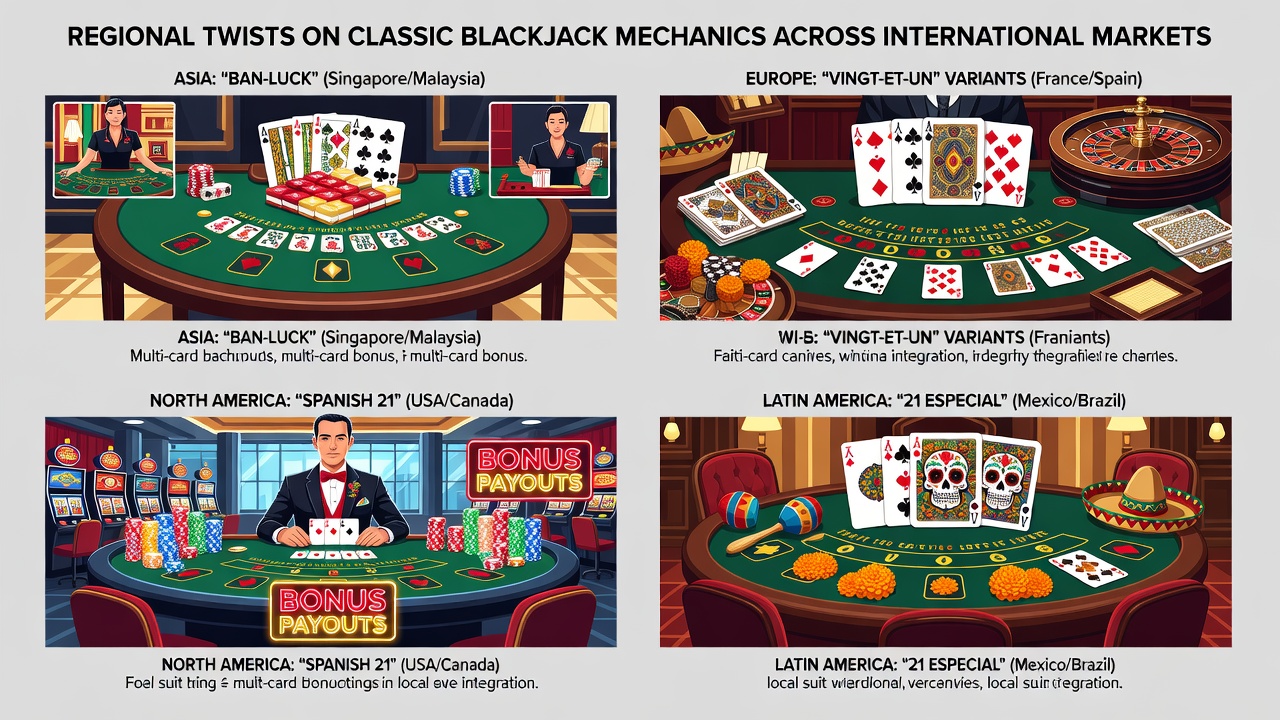
July 2026 brings scheduled updates to several Australian state licensing frameworks that will standardize surrender availability across more venues, and regulators in Victoria have already published draft guidelines that align late surrender timing with practices already common in New South Wales. These changes coincide with expanded use of electronic tables that display real-time rule summaries for visiting players.
Additional Variations in Doubling, Surrender, and Payouts
Canadian provincial casinos sometimes adopt the European no-hole-card model while retaining American-style splitting rules, and data from the Alcohol and Gaming Commission of Ontario records a gradual increase in tables that permit doubling after splits. South American markets, particularly in Argentina and Brazil, introduce localized bonus payouts for suited blackjacks or specific dealer upcards, yet they maintain the standard 3-to-2 natural payoff in regulated establishments. Each of these modifications requires players to recalibrate basic strategy, and industry reports confirm that printed strategy cards distributed at international events now include region-specific columns to address these differences.
Conclusion
Regional blackjack mechanics demonstrate how operators balance regulatory requirements with player expectations while preserving the mathematical foundation of the game. Data from multiple oversight bodies shows that deck penetration, surrender timing, and doubling restrictions continue to evolve, and those who track these shifts gain clearer insight into how local rules reshape standard play. As markets prepare for further adjustments in 2026, the pattern of incremental adaptation remains consistent across jurisdictions.