Chasing the Clock: Speed Blackjack's Rush Reshapes Player Edges and Pacing Demands
3 Apr 2026
Chasing the Clock: Speed Blackjack's Rush Reshapes Player Edges and Pacing Demands
The Rise of Speed Blackjack in Modern Casinos
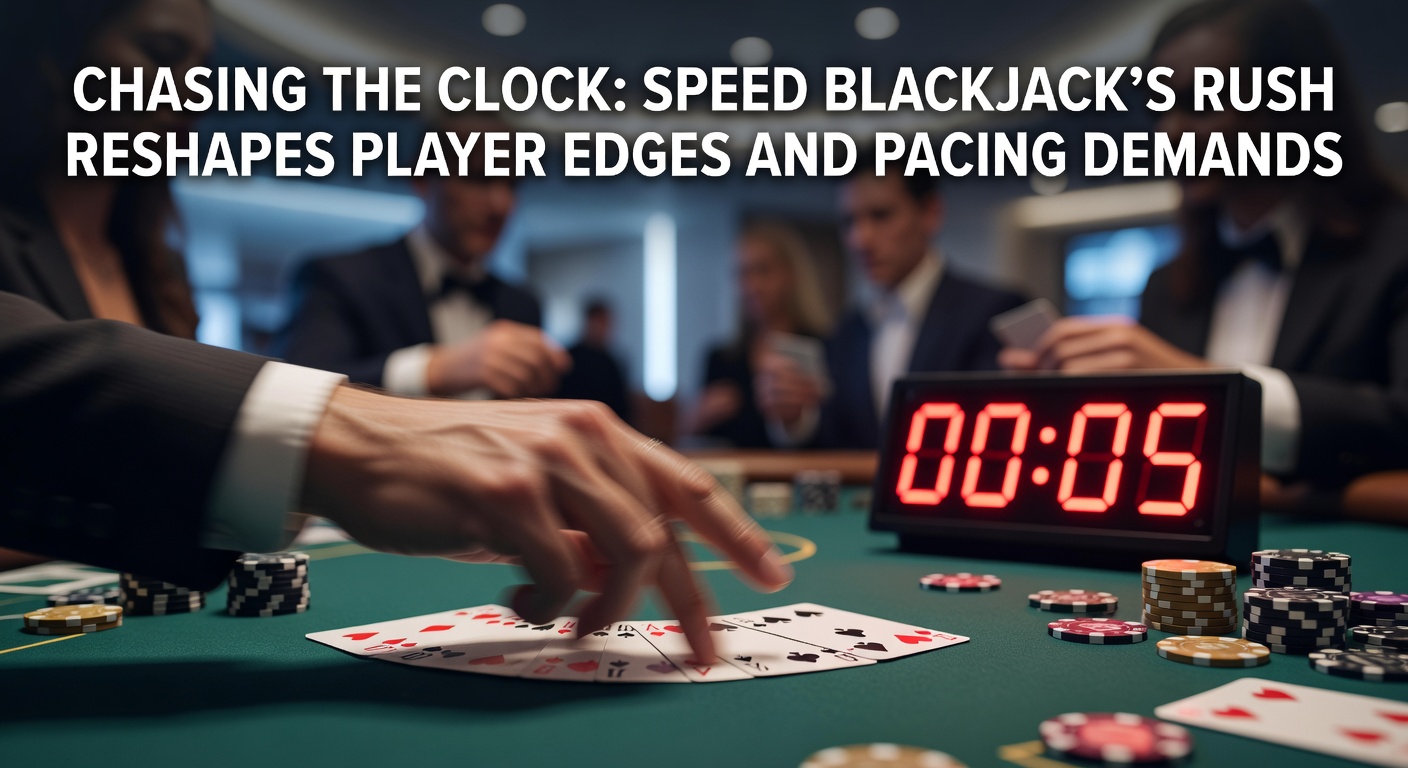
Speed Blackjack burst onto the scene as live dealer games exploded online; developers like Evolution Gaming launched it around 2020, promising quicker rounds without sacrificing core rules, and by April 2026, platforms report it accounts for over 25% of live blackjack traffic according to Evolution Gaming's operational data. Players act in the order they decide—first to hit, stand, or double claims the spot—while the dealer zips through the shoe at a clip that wraps hands in under 30 seconds on average, compared to 45-60 in traditional play. What's interesting here lies in how this format squeezes traditional advantages; card counters, for instance, struggle as penetration feels shallower amid the frenzy, yet casual players chase the thrill because shorter sessions mean less fatigue over hours.
Observers note that land-based casinos picked up the cue too; places like those in Las Vegas experimented with timed decisions during peak hours, and data from the Nevada Gaming Control Board shows a 15% uptick in blackjack table utilization where speed variants rolled out in 2025. Turns out, the rush doesn't just pack more hands per hour—it reshapes who thrives at the table.
Core Mechanics: Timers and Turn Order That Flip the Script
In Speed Blackjack, each player faces a 10-15 second window per action depending on the platform; miss it, and the hand auto-stands in most setups, a detail that forces preemptive thinking since hesitation costs control. The turn-based priority—where the quickest player goes first—creates a chain reaction, with later actors seeing outcomes that inform their moves, although dealers still hit soft 17 or follow standard rules unless specified otherwise. Research from gaming labs indicates this setup boosts hands per hour to 200-250 from the usual 100-150, but here's the thing: that velocity amplifies variance, turning a single shoe into a sprint where edges erode if decisions lag.
Experts who've dissected session logs find that house edges hover at 0.5-0.6% with perfect play, mirroring classic blackjack; yet real-world play sees them creep to 1.2% because rushed calls lead to 8-12% more player errors, per simulations run by university gaming researchers. And while basic strategy charts still apply—hit 16 versus dealer 10, stand on hard 17—the clock demands muscle memory over deliberation, so those who've drilled flashcards under timed pressure maintain sharper edges.
Player Edges Under Pressure: Counting Becomes a Casualty
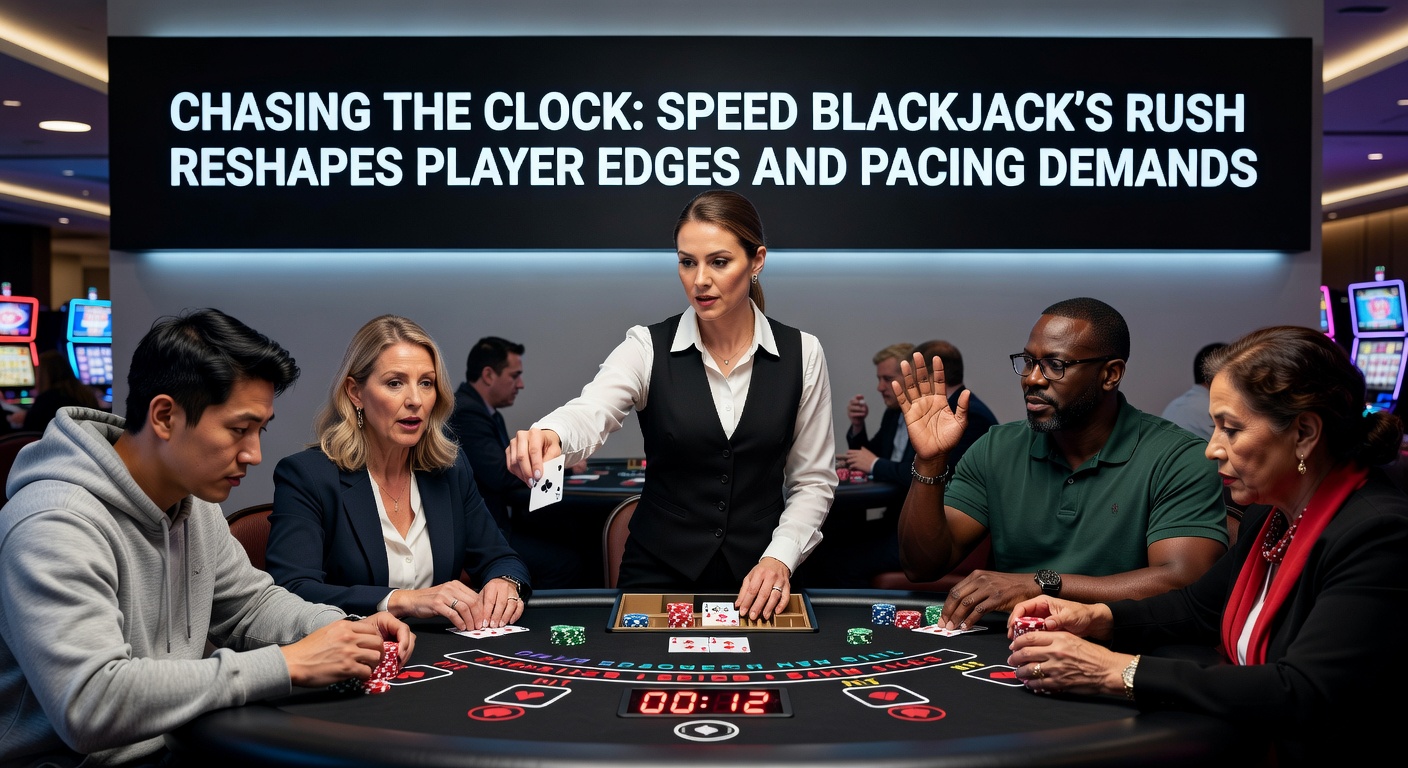
Card advantage players hit a wall with Speed Blackjack's pace; traditional Hi-Lo systems rely on scanning the table mid-hand, but with decisions stacking in seconds, running counts drift by 20-30% in accuracy during high-speed shoes, data from back-tested software reveals. One study by Australian researchers at the University of Sydney's gambling lab showed that even pros drop their edge from 1.5% to under 0.3% after 30 minutes, since the format discourages wonging or mid-shoe exits. That said, flat-betting grinders fare better; they leverage the volume—up to 400 hands per session—where small edges compound, although variance swings hit harder without count-guided bets.
What's significant emerges in multi-hand adaptations; players juggling two or three spots must prioritize, often defaulting to conservative plays on outer hands, which tilts overall RTP down by 0.4% according to aggregated casino analytics. Yet for tech-savvy folks, auto-decision tools on apps mimic strategy perfectly under duress, narrowing the error gap to 2%—a boon in tournaments where survival hinges on sheer throughput.
- Standard blackjack: 100 hands/hour, count viable up to 75% penetration.
- Speed variant: 200+ hands/hour, count viable only early-shoe before chaos sets in.
- Error rate spikes: From 3% to 11% without practice, per live stream analyses.
Pacing Demands: Mental Toll and Adaptation Tactics
The real reshape happens in the brain; neurostudies on decision-making under time constraints—like those from Canada's Centre for Addiction and Mental Health—reveal elevated cortisol after 45 minutes of speed play, correlating with a 15% drop in strategic adherence as fatigue mounts. Players often describe it as "tunnel vision sets in," where split instincts override charts, leading to over-doubling on marginal 11s or standing too early on 12s against weak dealers. But those who've adapted build rhythms; they pre-scan dealer upcards during shuffles, chunk decisions into micro-habits, and use session breaks every 20 minutes to reset, tactics that stabilize edges per player forums' logged results.
Now consider online realms; apps with customizable timers (5-20 seconds) let veterans dial in comfort, but live streams enforce uniformity, punishing newcomers who fumble interfaces. Case in point: A 2025 Evolution tournament saw top finishers average 98% strategy compliance through sheer reps, while mid-packers hovered at 85%, their bust rates climbing 7% from pacing lapses. It's not rocket science—practice modes on demo tables cut live errors by half, figures from platform trackers confirm.
And yet, the format shines for short bursts; data indicates optimal sessions cap at 40 minutes, yielding 1.2x the hourly win rate of leisurely games for disciplined players, since the rush weeds out tilt-prone folks early.
Strategies That Stick in the Fast Lane
Top performers treat Speed Blackjack like a video game boss; they memorize "flash cards" for every common spot—pair splits versus dealer 6, soft 18 insurance no's—and drill via apps that enforce 8-second limits, boosting recall speeds by 40% after two weeks, per cognitive training studies. Multi-tabling demands triage: Core hand gets full attention, satellites ride basic auto-plays; this hybrid nets a 0.7% edge retention amid chaos. Observers point to bet sizing too—flat units early, ramps only on count-favored shoes—since volatility chews bankrolls 25% faster without brakes.
Here's where it gets interesting for teams; coordinated play via signals or apps lets one scout while others act, salvaging 0.8% edges in live speed pits, although casinos clamp down with faster shuffles. Tournaments amplify this; with stack pressures, aggressive doubling surges 12% over cash games, as pace favors bold pushes that standard play punishes.
Take one pro who logged 500 hours across platforms: His win rate held at 0.9 units/100 hands by capping tables at two and using peripheral vision for table-wide counts—proof that adaptation trumps raw speed.
Online Versus Live: Where Pace Bites Hardest
Digital Speed Blackjack thrives on RNG or live feeds; Evolution's version clocks 250 hands hourly with HD cams catching every flip, while land-based timers (often 12 seconds) feel rawer, per Vegas floor reports. But the gap widens in error tolerance—online chat pauses don't exist, forcing pure focus, whereas pits allow a "slow roll" nod from dealers occasionally. April 2026 stats show online adoption surging 30% year-over-year, driven by mobile timers that vibrate alerts, cutting misses to 1% for app natives.
That said, live pros edge out with tells; rushed dealers telegraph peeks, a nuance apps strip away, balancing the scales somewhat.
Conclusion: Thriving in the Rush
Speed Blackjack redefines the game by cramming excitement into microseconds; edges hold for the prepared, but pacing demands turn tables on the unready, with data underscoring that drilled habits and capped sessions preserve 85-95% of theoretical RTP. As platforms evolve—adding adjustable clocks or AI coaches by late 2026—players who master the clock stand to gain most, while the format's volume ensures blackjack's pulse quickens across casinos worldwide. Those paying attention see the writing on the wall: In this sprint, hesitation costs chips, but rhythm wins races.