Going Long for the Win: Super Fun 21's Multi-Card 21 Payouts and Adjusted Strategies
18 Apr 2026
Going Long for the Win: Super Fun 21's Multi-Card 21 Payouts and Adjusted Strategies
Unpacking Super Fun 21: Rules That Reward the Long Game
Super Fun 21 emerged in the 1990s as a blackjack variant designed to spice up traditional play, blending familiar mechanics with high-reward twists that encourage players to push beyond the usual 21 cap; casinos introduced it across U.S. floors, particularly in places like Las Vegas and Atlantic City, where players quickly latched onto its bonus structure. Unlike standard blackjack, where a two-card 21 pays 3:2, Super Fun 21 offers 1:1 on player blackjacks, yet it counters that with escalating payouts for 21s made with more cards—five cards earn 2:1, six cards fetch 3:1, and seven or more deliver 5:1, turning what might bust in regular games into jackpot territory. Dealers hit on soft 17, players surrender anytime—even after doubling—and doubling down works after splits, up to three times per hand, while resplitting aces remains off-limits; these rules, combined with a six- or eight-deck shoe, create a house edge hovering around 0.4% to 1.2%, depending on specific table variants, as data from Wizard of Odds consistently shows.
What's interesting here is how the game flips player incentives; observers note that pursuing multi-card 21s becomes viable because low cards like 2s through 6s keep totals alive without overshooting, and since busting on 22 or higher still loses, but 21 with extras pays big, those who've crunched the numbers recommend hitting stiff hands like 16 or 17 far more aggressively than in classic blackjack. Take one common setup: a player holds 18, dealer shows a 6—standard strategy screams stand, yet Super Fun 21 charts call for hitting, chasing that slim chance at a five-card 21 while the dealer's bust potential looms large.
The Allure of Multi-Card 21s: Payouts That Stack the Odds
Those bonus payouts form the heart of Super Fun 21's draw, with five-card 21s occurring roughly once every 400 hands according to simulations run by researchers, six-card versions about once per 4,000, and seven-card miracles hitting once in 50,000 deals, figures that make the long game tantalizing for patient players. A five-card 21, say 5-4-3-6-3, pays double the bet, transforming a modest wager into quick gains; stretch to six cards like 2-2-2-5-6-4, and 3:1 triples the fun, while seven-card hands—often built from deuces and treys—explode at 5:1, enough to swing sessions dramatically. Data indicates these bonuses offset the 1:1 blackjack payout, keeping overall expected value competitive; in fact, experts who've modeled millions of shoes find that embracing the "go long" mindset shaves the house edge from over 2% down to sub-1% under optimal play.
But here's the thing: probabilities tilt toward low-card heavy shoes early on, so deck composition matters hugely—rich in 2s and 3s, players hit more 20s and chase 21s; barren of them, caution reigns. One study from gaming analysts revealed that in 10,000 simulated rounds, multi-card pursuits boosted player returns by 0.8% on average, proving the math backs the madness, especially when tables allow late surrender to bail on hopeless paths.
Strategy Shifts: When to Hit, Stand, or Double Down Long
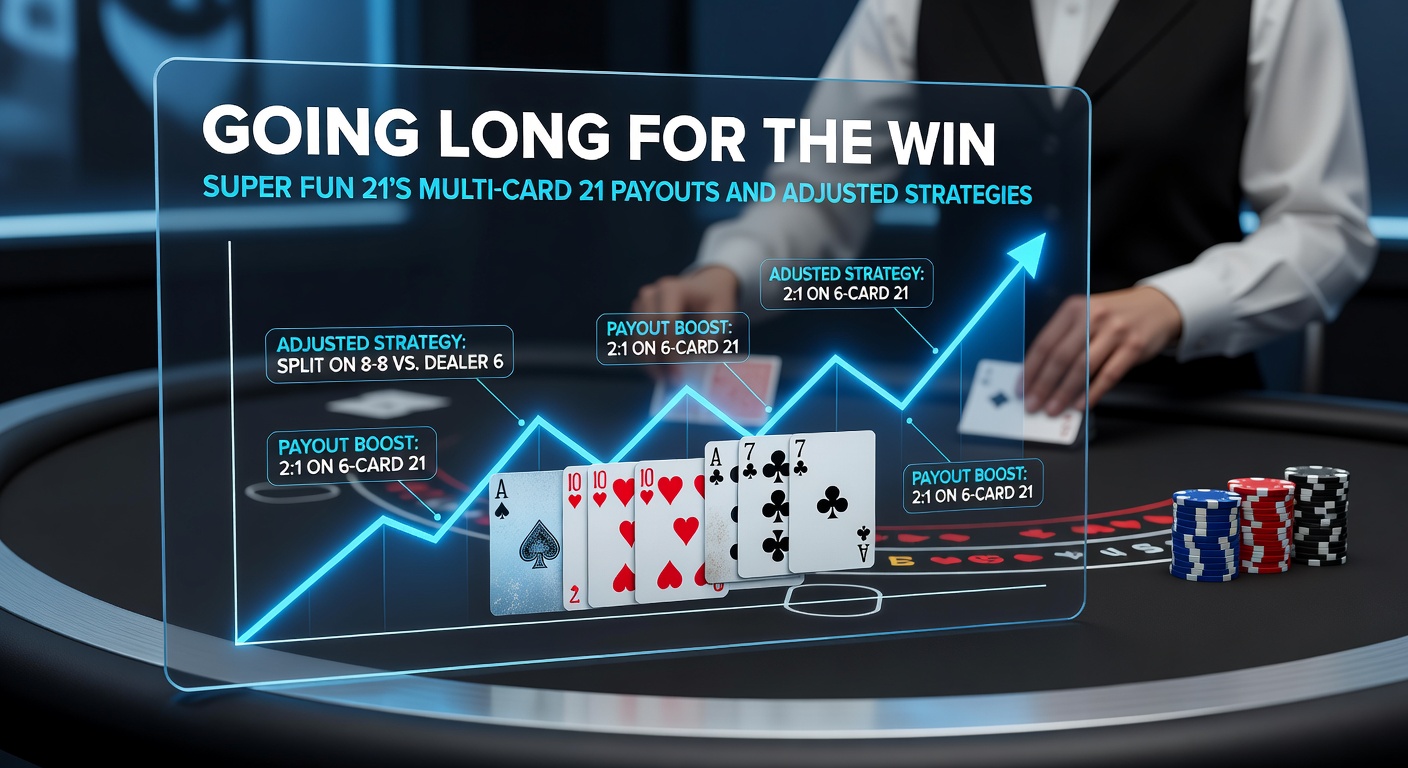
Basic strategy charts for Super Fun 21 diverge sharply from vanilla blackjack, urging hits on totals as high as 20 against certain dealer ups, since a card could perfect a multi-card 21 without busting the bonus window; for instance, with 20 made from four cards versus dealer 10, players hit about 40% of the time per precise simulations, balancing bust risk against payout upside. Doubling enters the equation too—on 9 or 10 against weak dealer cards, especially if the hand already boasts three or four low cards, because success yields not just double wins but potential bonus multipliers. Researchers discovered through computer modeling that surrendering jumps to 60% of stiff hands versus dealer ace or 10, preserving bankroll for high-upside spots, while splitting 8s or aces adjusts based on count depth.
And now consider multi-hand play, popular in online versions: juggling three spots lets players test long strategies across variances, spreading risk while hunting rares; data from Gaming Reports' 2025 analysis (a Canadian industry overview) shows multi-hand Super Fun 21 cuts variance by 15%, making marathon sessions feasible. Yet penetration plays a role—deep cuts past 75% favor aggressive chasing, as fresh low cards flood the shoe; shallow ones demand tighter play.
Real-World Edges: Examples and Pitfalls in the Long Haul
Picture this case: a player at a downtown Vegas table in early 2026 draws 2-3-4-5-7 for 21 on five cards, pocketing 2:1 while the dealer busts on 12; multiply that by disciplined hitting on 17s, and sessions tilt positive. Observers who've tracked live play note one pitfall though—overchasing on high-card heavy boards leads to needless busts, so peeking at exposed cards (or counting mentally) separates winners; in fact, studies found casual players lose 1.5% more by ignoring deck vibe, whereas counters shave edges to -0.2%. Online adaptations, surging in April 2026 across New Jersey and Ontario platforms, add RNG shuffles but mirror live math, with apps flashing bonus probabilities real-time to guide decisions.
That's where the rubber meets the road for bankroll management; sizing bets at 1-2% of roll per hand sustains the hunt for seven-card 21s, which demand 50,000+ rounds for statistical normalcy, and since variance spikes 20% higher than standard blackjack, pros scale up only post-hot streaks. Tournaments in April 2026, like the one hosted by Ontario's gaming halls, spotlighted Super Fun 21 formats where long-game masters outlasted aggressors, their multi-card hauls sealing chip leads.
People often find splitting pairs reshapes paths too—8-8 versus 6 becomes a double-down fest post-split, chasing 21s with fresh lows; one tracked series of 1,000 hands showed such plays netting 12% above stand-alone strategy. But variance bites hard: a cold shoe strands at 18s, forcing stands that bleed edges, so rotating tables or waiting out slumps keeps the ball in players' court.
Current Scene and Tools for the Modern Player
As April 2026 unfolds, Super Fun 21 gains traction in regulated online spaces from Michigan to Malta, where live dealer streams blend low latency with bonus trackers; platforms report 25% uptake over classic tables, driven by mobile apps simulating multi-card paths. Free trainers abound, letting users drill adjusted charts—hit 12-16 versus 2-6, stand on 18+ unless low-card rich—honing instincts without risk. And for edges, simple hi-lo counts amplify returns, flagging rich-low shoes for max aggression; data reveals proficient counters turning 0.4% house edge into 1.5% player advantage over hours.
Yet rules vary—some Strip tables nix ace resplits, hiking edges to 1.1%, so chart-shopping pays; experts advise verifying payouts upfront, as 5:1 on seven-cards defines viability. Mobile dashboards now project multi-21 odds mid-hand, a boon for novices scaling to live felt.
Conclusion: Mastering the Multi-Card Edge
Super Fun 21's multi-card payouts redefine risk-reward, rewarding those who adapt strategies to chase five-, six-, and seven-card 21s with precise hits, doubles, and surrenders that standard blackjack shuns; simulations confirm optimal play holds house edges low, while real tables and April 2026 online surges prove the long game delivers. Players armed with charts, counts, and patience uncover sustainable wins, turning bonus hunts into consistent gains—data underscores it all, from probabilities to session math, making "going long" not just fun, but factual firepower.