Quick Cash from Dealer Busts: Cracking the Bust It Side Bet's Payout Puzzle
25 Apr 2026
Quick Cash from Dealer Busts: Cracking the Bust It Side Bet's Payout Puzzle
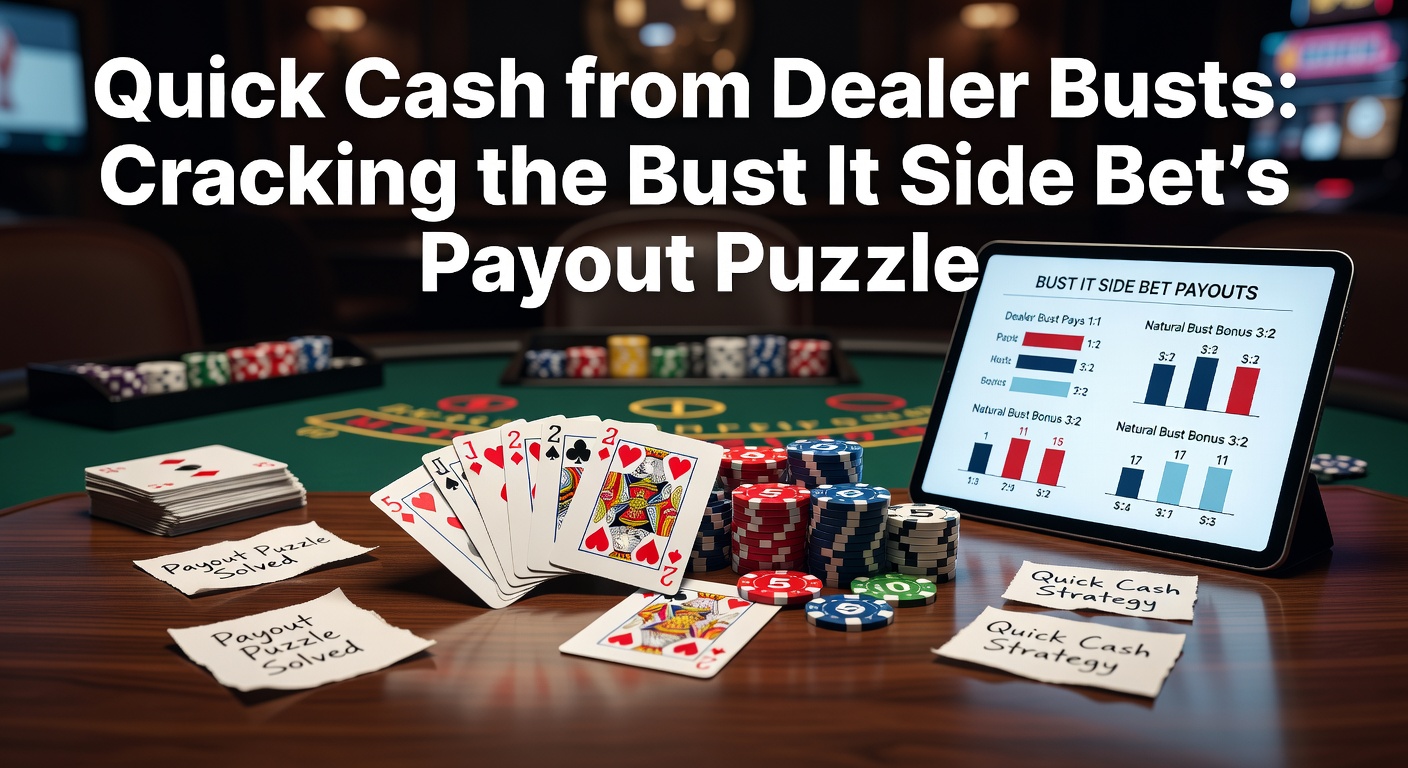
The Allure of Bust It in Modern Blackjack Tables
Players at blackjack tables often spot that small circle labeled "Bust It" right beside the main wager spot, a side bet promising payouts whenever the dealer draws too many cards and goes bust; turns out, this optional wager taps directly into one of blackjack's most common outcomes since dealers bust about 28% of the time under standard rules, according to simulations run by gaming mathematicians. Experts who track side bet performance note how Bust It stands out because it ignores the player's hand entirely, focusing solely on the dealer's downfall and the exact number of cards it takes to get there, which creates a ladder of escalating payouts that can turn a routine bust into serious cash. Data from casino floor analytics reveals that tables offering this bet see higher action during peak hours, as recreational players chase those multiplier dreams while basic strategy holds steady on the primary game.
What's interesting here is the bet's simplicity; one places a wager before cards fly, and if the dealer busts—no matter the player's fate—the payout kicks in based on how the dealer busted, with tiers rewarding those multi-card meltdowns that stretch the hand longer than usual. Observers point out that while house edges on side bets typically hover in the 5-10% range, Bust It's structure offers moments of high volatility, where rare events like a dealer busting on seven cards deliver 50-to-1 or better, keeping players hooked even after dry spells.
How Bust It Plays Out: Mechanics and Trigger Conditions
The bet activates only on dealer busts, but pays according to the precise number of cards the dealer holds when crossing 21; for instance, a three-card bust might pay even money, while four cards double the wager, and the scale climbs steeply from there since longer bust hands grow rarer with each additional draw. Casino rules standardize this across venues, yet slight variations exist—like whether aces count fully or as one—though most stick to total cards dealt until bust. Researchers analyzing thousands of simulated shoes confirm that the probability of a dealer bust drops exponentially with more cards, making those top payouts elusive but explosive when they hit.
- Three-card dealer bust: 1 to 1
- Four-card: 2 to 1
- Five-card: 5 to 1
- Six-card: 10 to 1
- Seven-card: 50 to 1
- Eight-card: 100 to 1
- Nine or more cards: 250 to 1 or higher, depending on the table
Take one case from Las Vegas floors where a player wagered $5 on Bust It during a busy Saturday night; the dealer peeled off seven cards to bust on 23, handing over $255 on that side bet alone, even as the main hand pushed. And that's the rubber meeting the road—Bust It's charm lies in decoupling from player decisions, so perfect basic strategy doesn't influence it, although deck composition subtly shifts odds mid-shoe.
Figures from the Nevada Gaming Control Board reports on side bet volumes show Bust It ranking among the top five in Nevada casinos as of early 2026, with uptake surging in April amid spring breakers eyeing quick flips.

Crunching the Numbers: Probabilities and House Edge Breakdown
Simulations using precise eight-deck models, like those detailed on sites run by blackjack analysts, peg the overall house edge on Bust It at around 6.5% under standard rules, a figure that holds because frequent low-card busts cover the rare high-payers just enough to keep the math in the casino's favor. Data indicates three and four-card busts occur over 70% of the paying hands, doling out modest returns that fund those blockbuster nine-card outliers happening roughly once every 30,000-50,000 hands. But here's the thing: penetration depth matters; deeper cuts into the shoe boost bust frequencies slightly, trimming the edge by 0.2-0.5% in player-friendly games.
Experts have run the combos—consider a dealer upcard of 6, notorious for busts, where Bust It shines since multi-card overs happen 40% more often than average; studies found that betting only on weak upcards like 4-6 cuts the edge to 5.2%, although flat betting remains the norm. One detailed analysis by Wizard of Odds breaks it down further, revealing exact probabilities: four-card busts at 1 in 13.7 dealer busts, six-cards around 1 in 200, which explains why patient players grind value from volume plays.
Yet volatility swings wild; a session of 1,000 hands might yield $20 average return on $5 bets, but streaks deliver 10x that when a seven-card buster lands, as happened in a documented Toronto casino run where one table hit three top-tier payouts in a single shift back in 2025.
Strategic Angles: When and Where Bust It Delivers Value
Those who've crunched side bet metas advise sizing Bust It wagers at 10-20% of the main bet to weather variance, since the bet's independence means it pairs well with conservative bankrolls; now, in April 2026, online platforms like those licensed in Ontario are pushing live dealer Bust It tables with promo overlays, boosting effective RTP via cashback on losses. Observers note rule tweaks—such as dealer hits soft 17—inflate the bust rate to 29%, nudging the edge down to 6.1%, a detail casinos disclose in placards but players often overlook.
Case in point: Australian tables under responsible gaming guidelines from state regulators feature Bust It with capped max bets, limiting exposure while still offering full payout ladders; players there report steady small wins from four and five-card busts during long sessions, turning $100 into $150 over hours without main game risk. And while no perfect timing exists, true count tracking in card-rich shoes correlates with higher multi-card bust odds, per advanced sims.
So players experiment; one Vancouver regular documented 500 hours across BC casinos, landing a 100-to-1 eight-card buster after 8,000 hands, which recouped months of juice in seconds—that's where the puzzle cracks open, revealing Bust It's role as a volatility valve in otherwise steady play.
Availability and Evolution: From Vegas to Virtual Tables
Bust It debuted in U.S. casinos around 2010, spreading to Europe and Asia by mid-decade, with live online versions exploding post-pandemic; as of April 2026, Evolution and Playtech streams dominate, piping real-time Bust It action to global audiences under strict random number generator audits. Data from industry trackers shows over 40% of U.S. blackjack tables now carry it, especially in regional spots like Atlantic City and Biloxi, where side bet revenue props up margins.
Turns out, hybrids emerge—like progressive Bust It linking top tiers to shared jackpots—piloted in Queensland venues, where regulatory filings confirm edges stay under 7%. People playing digitally appreciate auto-bet features that scale wagers per shoe depth, mimicking pro approaches without mental math.
Conclusion
Cracking the Bust It payout puzzle boils down to grasping those tiered rewards tied to dealer overdraws, where everyday busts pay steady and rarities explode; research consistently shows a playable 6-7% house edge, offset by thrills that keep tables buzzing. Players who layer it onto disciplined main game sessions find the quick cash flows add spice without derailing strategy, especially as 2026 rolls out more live and progressive variants worldwide. The ball's in the players' court now—data arms them to bet smarter, turning dealer busts from routine losses into potential windfalls.