Side Bets' Secret Scales: Weighing Blackjack Add-On Wagers for Edge Hunters
14 Apr 2026
Side Bets' Secret Scales: Weighing Blackjack Add-On Wagers for Edge Hunters
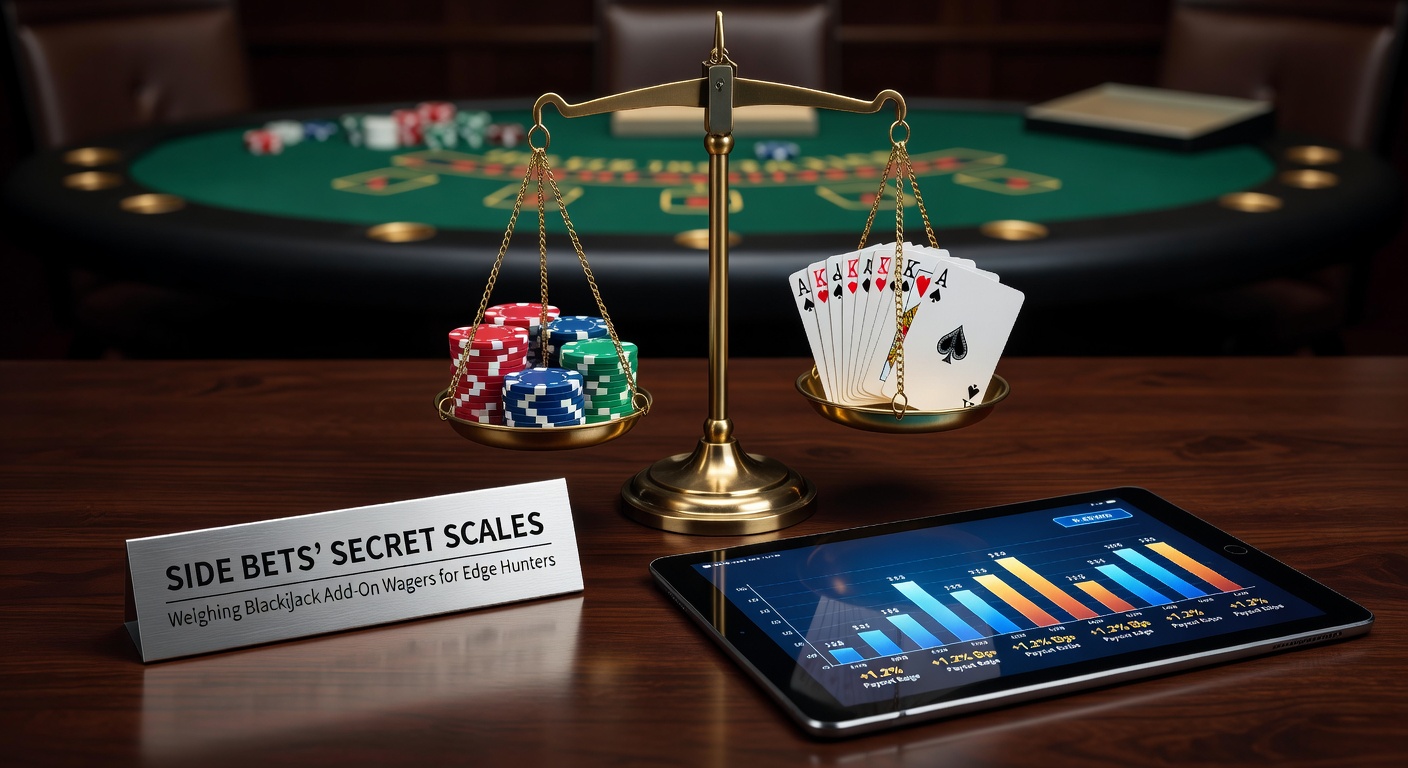
Blackjack tables across casinos worldwide tempt players with flashy side bets, those optional add-ons promising big payouts for specific hand combinations, yet they often carry house edges steeper than the main game; experts who've crunched the numbers note how these wagers lure in edge hunters seeking hidden value, but only a few reveal edges worth chasing under the right conditions.
Understanding the Allure and Mechanics of Blackjack Side Bets
Side bets emerge as small chips placed alongside the primary blackjack wager, paying out based on the player's initial cards, the dealer's upcard, or both combined; common variants include Perfect Pairs, where players win for receiving a pair in their first two cards, and 21+3, which treats those cards plus the dealer's upcard like a poker hand such as a flush or straight. What's interesting is how casinos roll these out to boost action at tables, especially during slower hours, since they add excitement without altering core blackjack rules; data from long-term simulations shows players wager about 20-30% more per hand when side bets appear, according to analysis by Wizard of Odds, a resource revered by probability enthusiasts for its precise house edge calculations.
Take Perfect Pairs, for instance; players score 6-to-1 on mixed-color pairs, 12-to-1 on same-color, and 25-to-1 on suited diamonds or hearts, but the house edge hovers around 6.23% in standard 6-8 deck games, making it a tough nut to crack without card counting tweaks. And then there's Lucky Lucky, rewarding totals like 7-7-7 or 6-7-8 for 100-to-1 or 200-to-1, yet its baseline edge sits at 5.5% or higher; observers point out these payouts dazzle, but the math stacks the deck firmly for the house in shoe games.
Popular Side Bets Breakdown
- Perfect Pairs: Focuses solely on player pair types, edge ~6%.
- 21+3: Poker-style hand from three cards, edge 3.2-5.5% depending on rules.
- Blazing 7s: Multi-deck 7s combinations, edge up to 7.5%.
- King's Bounty: Ties to dealer's upcard and player total, edge 4-6%.
- Dragon Bonus: Banker/player hand strengths versus dealer, edge 2.7-9.5% by deck count.
These examples illustrate the variety, with edges fluctuating based on decks in play and specific payout tables; players who've dissected casino floors report Dragon Bonus offering the lowest house edge at 2.65% in single-deck setups, a rare gem for those hunting positivity through advantage play.
House Edges Exposed: The Math Behind the Wagers
Researchers at the University of Nevada's Center for Gaming Research have modeled thousands of side bet outcomes, revealing how most carry edges two to three times the main game's 0.5% in favorable rules; for Perfect Pairs, combinatorial analysis yields an RTP of 93.77%, meaning for every $100 wagered, expect $93.77 back long-term, since probabilities of mixed pairs (about 16%) and suited ones (0.5%) rarely overcome the payout structure. But here's the thing: 21+3 shines brighter in some variants, with an edge as low as 3.24% when payouts reward straights at 10-to-1 and flushes at 5-to-1; studies confirm this because poker hand frequencies align better here than in pair-focused bets.
Now consider Blazing 7s, where seven consecutive 7s fetch 5,000-to-1, yet the edge climbs to 7.36% in eight-deck shoes, punishing players who ignore deck penetration; experts observe that shallower penetrators worsen all side bets, as clustering reduces combo likelihoods. Turns out, data from Nevada Gaming Control Board reports on table game win percentages corroborates this, showing side bet contributions padding casino holds by 10-15% of total blackjack revenue in Las Vegas properties during peak seasons.
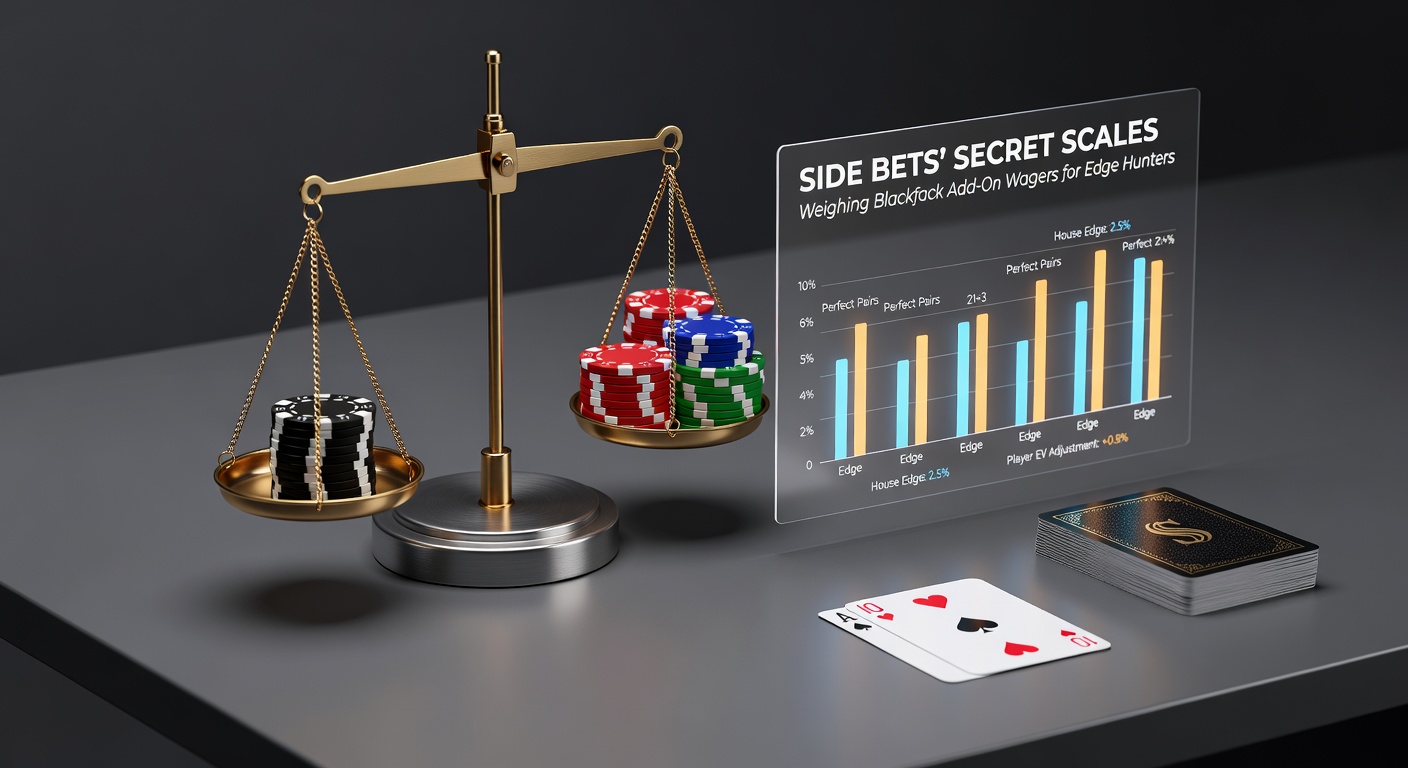
Edge hunters pivot to countable side bets like Lucky Lucky or Dragon Bonus, where running counts correlate with outcomes; one simulation series by advantage players demonstrated Dragon Bonus flipping positive above +4 true count in six-deck games, since strong hands cluster in player-favorable decks, although variance demands deep bankrolls to weather swings.
Variations Across Regions and Platforms
Casinos tweak side bets regionally, with Australian venues favoring high-volatility options like Side Bet City hybrids, where edges average 4.8% per Gaming Research Australia data; European floors, meanwhile, integrate progressive jackpots on 21+3, boosting RTP to 98% for top tiers but diluting base wagers. Online platforms amplify choices, offering Buster Blackjack—paying for dealer busts by card count—with edges from 1.3% in live dealer formats; people who've tracked Ontario's iGaming scene note Buster's popularity there, as regulated sites list transparent RTPs around 98.7% under Alcohol and Gaming Commission oversight.
Yet deck count dictates everything; single-deck Dragon Bonus drops to 2.65% house edge, while eight-deck versions balloon to 9.5%, a spread advantage players exploit by scouting deep-penetration tables. And in April 2026, reports from Atlantic City indicate Evolution Gaming rolling out enhanced side bet progressives on live tables, tying jackpots to rare combos like suited trips in 21+3, potentially shaving edges below 3% for contributors—a development edge hunters monitor closely as it reshapes floor dynamics.
Live vs. RNG: Subtle Shifts in Side Bet Odds
Live dealer streams preserve shoe integrity, aiding counters on bets like Perfect Pairs, whereas RNG shuffles reset counts per hand, neutralizing edges entirely; figures reveal live Dragon Bonus RTP hitting 97.5% with skilled play, but RNG caps at 97.35% flat, underscoring why advantage seekers flock to streamed tables with verifiable deck tracking.
Strategies for Edge Hunters: When to Weigh In
Those chasing positivity scale side bets against main game volatility, betting only when counts scream opportunity; for 21+3, ramp up above +2 true count, as flush probabilities surge 15% in ace-rich shoes, simulations confirm. Perfect Pairs demands +6 or higher for breakeven, a high bar met rarely, so experts advise skipping unless single-deck. Bankroll sizing follows suit—20-50 units per side wager minimum, since 1,000-hand samples swing wildly; one case study from a Vancouver advantage group showed $10k variance on $25 Dragon bets over 5,000 hands, highlighting the grind.
Multi-hand play compounds exposure, yet correlates counts across spots for better accuracy; observers note teams coordinating this way lift overall edges by 0.5-1% on countable sides. The reality is, non-countable bets like King's Bounty stay firm at 4.8% edge regardless, making them table candy best avoided by serious hunters.
Scouting pays off too; apps and forums log casino side bet menus, revealing spots like Macau's high-limit rooms offering 99.2% RTP Blazing 7s progressives—outliers worth the flight for dedicated players.
Conclusion
Side bets pack blackjack tables with promise and peril, their scales tipping heavily toward houses in most setups, yet countable variants like Dragon Bonus offer edge hunters legitimate paths to positivity under precise conditions; data underscores avoiding high-edge traps like Blazing 7s while targeting low-edge, deep-penetration opportunities, especially as April 2026 innovations from providers like Evolution hint at evolving landscapes. Players who master these weights navigate casinos smarter, turning add-ons from distractions into calculated edges, all while the main game's discipline anchors the session.