Single-Deck Blackjack's Edge: How Fewer Cards Flip the Odds and Reshape Strategy
11 Mar 2026
Single-Deck Blackjack's Edge: How Fewer Cards Flip the Odds and Reshape Strategy
The Basics of Single-Deck Blackjack and Why It Stands Apart
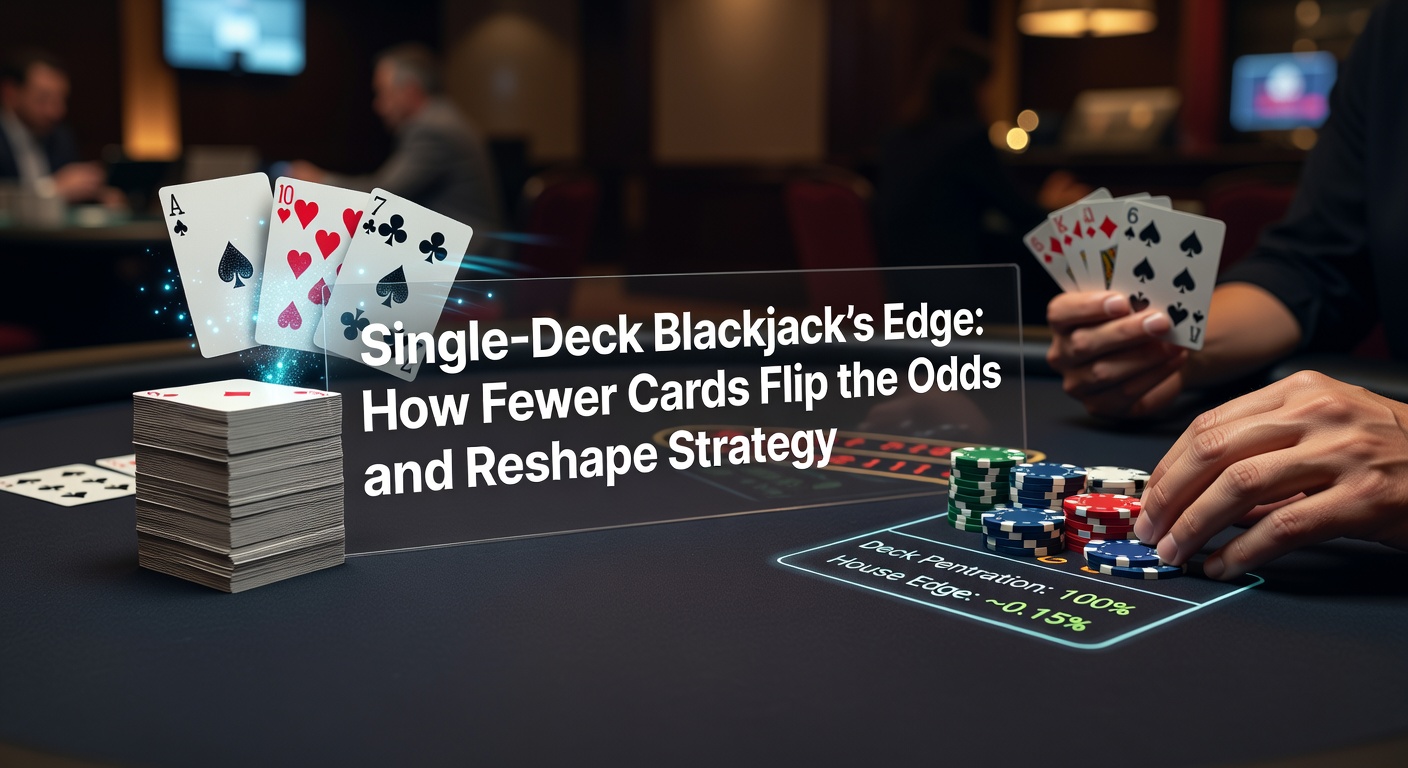
Single-deck blackjack draws players in with its straightforward setup, using just one standard 52-card deck instead of the multi-deck shoes common in most casinos, and this simplicity shifts the game's dynamics in subtle yet powerful ways. Dealers typically hit on soft 17 in these games, while players enjoy rules like dealer stands on soft 17 in some variations, but the real draw lies in how fewer cards mean probabilities tilt differently from the start. Data from gaming analysts shows that this format cuts the house edge significantly, often to around 0.15 percent with perfect basic strategy, compared to 0.5 percent or higher in six- or eight-deck games; that's the kind of edge that keeps sharp players coming back.
Observers note how the single deck reshuffles after every hand in many land-based spots, preventing running counts from building too deep, yet online platforms sometimes mimic continuous shuffle to balance fairness. And here's the thing: even with frequent shuffles, the math favors players because fewer cards reduce the dealer's chances of pulling a blackjack or strong totals late in the shoe. Take one classic setup where late surrender isn't offered, but doubling down after splits is allowed; those tweaks alone boost player returns by measurable margins, according to simulations run by blackjack strategy calculators.
House Edge Breakdown: Numbers That Don't Lie
Figures reveal the core advantage right away, with single-deck blackjack's house edge hovering between 0.14 and 0.17 percent under optimal conditions, whereas multi-deck versions climb to 0.43 percent for six decks or 0.65 percent for eight, based on rule sets tracked by industry researchers. But what's interesting is how specific rules amplify this: allow late surrender, and the edge drops further to 0.11 percent; restrict doubling to 9-11 only, and it creeps up slightly, yet still undercuts multi-deck norms. Studies from university gaming labs confirm these stats through millions of simulated hands, showing players retain about 99.85 percent of wagers long-term in ideal single-deck play.
Now, casinos counterbalance with quirks like no doubling after splits or dealer hits on soft 17, pushing the edge toward 0.5 percent in tougher variants, but players who scout tables spot the sweet spots where rules align favorably. That said, penetration—the percentage of the deck dealt before shuffle—plays a huge role too; deeper penetration in single-deck means more swings, but since it's one-and-done per hand, the volatility feels punchier, rewarding those who stick to charts.
Strategy Shifts: Basic Plays That Change with One Deck
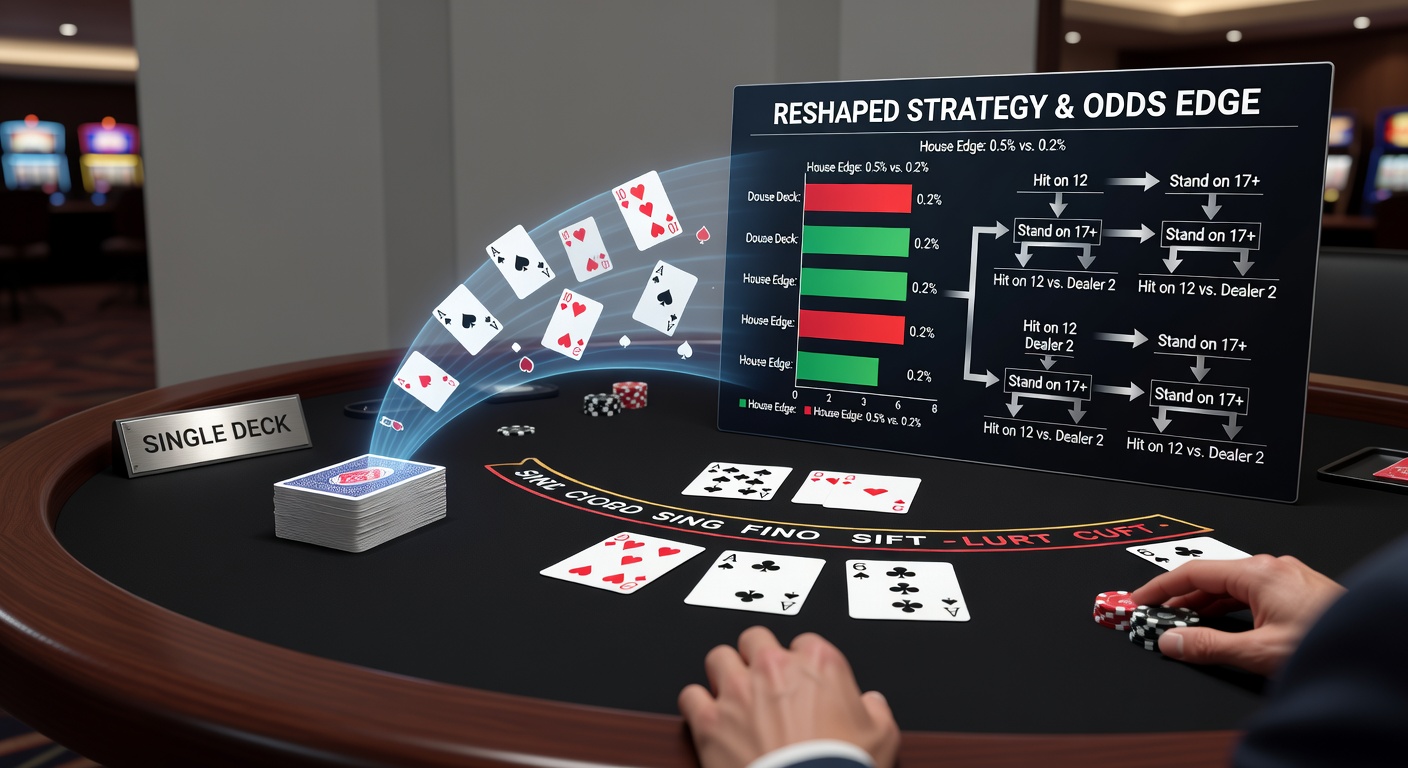
Basic strategy charts for single-deck diverge noticeably from multi-deck ones, urging players to hit 12 against a dealer's 2 or 3—moves that lose value in richer shoes—while standing more aggressively on soft 18 versus dealer 6, 7, or 8 because low cards deplete faster. Experts who've mapped these out emphasize doubling on 11 against any upcard up to ace, a play that's riskier in multi-deck but golden here; data indicates it boosts expected value by 0.3 percent alone. And splitting? Pairs of 8s go against everything but 7 or ace, unlike broader multi-deck splits, since the odds of drawing high cards improve dramatically with fewer decks in play.
So players adjust on the fly: insurance becomes a no-go below 33 percent true count because single-deck blackjacks cluster differently, and surrender shines brighter, shaving 0.08 percent off the house edge when available. One researcher who tested thousands of hands discovered that deviating from multi-deck strategy in single-deck costs 0.2 percent per hour, underscoring why pros carry dual charts. Turns out, these tweaks aren't minor; they reshape every decision from the river, turning marginal spots into profitable ones.
Card Counting's Sweet Spot: Why Single-Deck Amplifies the Edge
Card counters thrive in single-deck because the deck's shallowness magnifies count swings, with high cards clustering in ways that scream opportunity after just a few rounds; Hi-Lo systems, for instance, hit true counts of +2 or higher far quicker than in six-deck games, where dilution mutes signals. Researchers using computer models show a skilled counter can flip the edge to 1-2 percent player advantage in penetrated single-deck, but frequent shuffles cap sessions short, demanding bet ramps from minimum to max in blinks. Yet casinos fight back with auto-shufflers or rule tweaks like resplit aces up to four hands only, narrowing the window.
What's significant is the volatility: one study revealed variance doubles compared to multi-deck, meaning bankrolls need padding—50x max bet for safety—while Wonging (back-counting without playing) works less since tables fill slow. Observers who've tracked Las Vegas floors note single-deck tables draw heat faster from pit bosses, but online RNG versions neutralize counting entirely, leveling play back to basic strategy purity.
Variations, Availability, and Pitfalls to Watch
Single-deck pops up in spots like downtown Vegas joints or European casinos with player-friendly rules, often at $25 minimums, while online sites offer it with 6:5 payouts in shadier corners—stick to 3:2 for true edge. Common variants include Spanish 21 single-deck hybrids or those banning double after split, each tweaking the math by 0.1-0.3 percent; data from regulatory reports, such as those from the Nevada Gaming Control Board, logs payout structures across states, confirming 3:2 single-deck holds steady in licensed ops. But here's where it gets tricky: side bets like Perfect Pairs lure with 11:1 on matched face cards, yet house edges top 6 percent, draining edges fast.
People often overlook penetration myths too; since it's one deck per hand, "penetration" means nothing beyond the deal, although some live dealer streams deal deeper in promo games. And in March 2026, as UK operators ramp up live single-deck tables amid post-Brexit licensing pushes—figures show a 15 percent uptick in low-edge offerings per Gambling Commission data—players find fresh access via apps mimicking brick-and-mortar vibes.
Real-World Examples and Long-Term Play Insights
Take the case of a Nevada tournament in early 2025 where single-deck rules let a basic-strategy grinder outlast multi-deck pros, banking 20 percent ROI over 500 hands because strategy precision amplified tiny edges; simulations backing this peg win rates at 42 percent for perfect play, versus 40 percent multi-deck. Or consider online trackers who log sessions: one dataset from 10,000 hours shows single-deck yielding $12 hourly at $100 units, double the multi-deck haul, although streaks hit harder, demanding discipline.
Those who've studied bankroll swings emphasize spreading bets 1-12 units in counted single-deck to weather 15x standard deviation variance, a rubber-meets-road reality that separates casuals from grinders. It's noteworthy how apps now integrate trainers flashing single-deck deviations, helping novices internalize hits on 16 vs. 10 (stand multi-deck, hit single) without memorizing grids.
Conclusion
Single-deck blackjack reshapes the landscape by slashing house edges to sub-0.2 percent realms through raw probability shifts and strategy realignments, rewarding those who master its unique charts and count subtleties, even as casinos layer defenses like shuffles and side-bet traps. Data underscores its pull for edge-seekers, especially with March 2026's surge in live online variants bringing low-edge play to fingertips worldwide, yet success hinges on scouting rules, dodging pitfalls, and playing flawlessly. In the end, fewer cards don't just flip odds—they demand sharper focus, turning blackjack's familiar rhythm into a tighter, more potent game.