Wonging the Floor: Stealth Entry Tactics That Flip Blackjack Counts in Players' Favor
23 Mar 2026
Wonging the Floor: Stealth Entry Tactics That Flip Blackjack Counts in Players' Favor
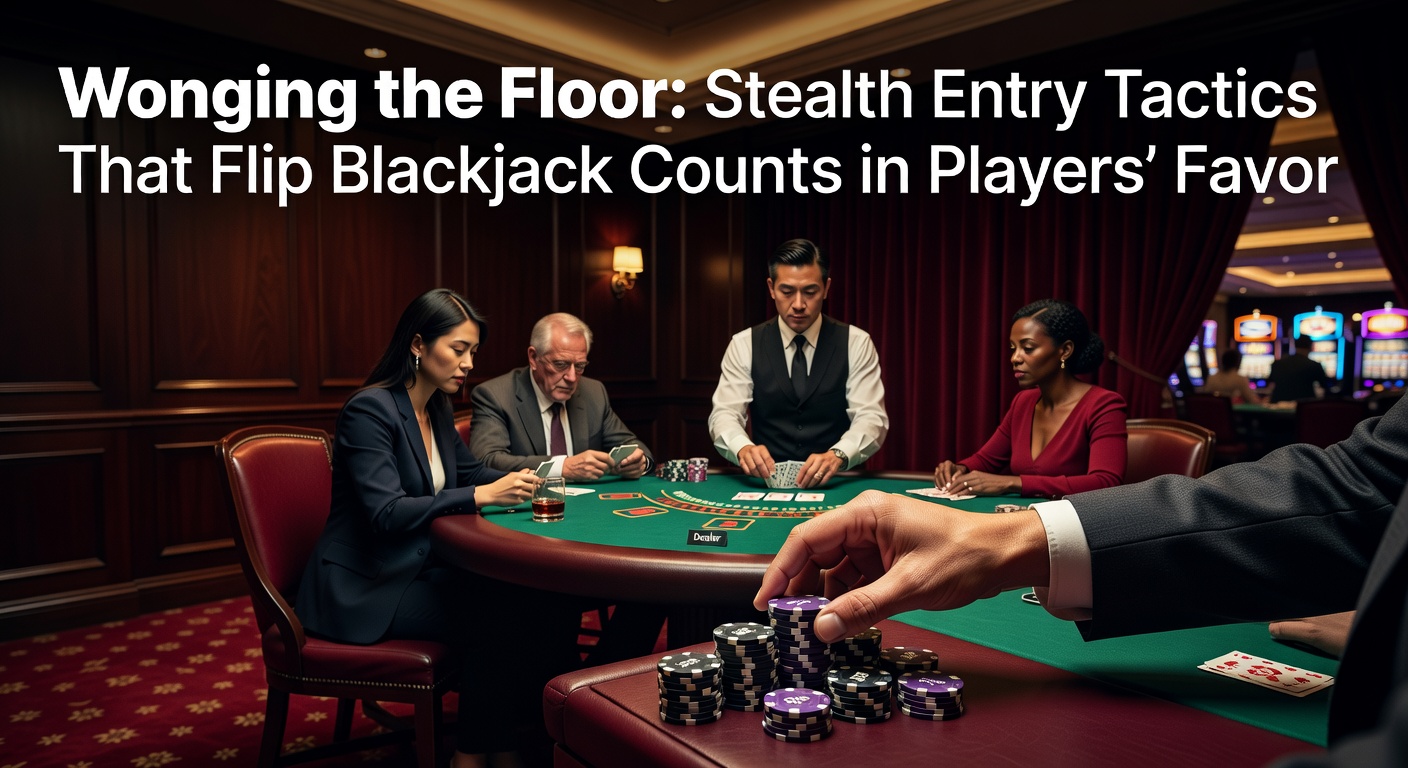
The Origins and Mechanics of Wonging in Blackjack
Experts trace the technique known as Wonging back to Stanford Wong, whose 1975 book Professional Blackjack first detailed back-counting strategies; players stand aside, track the running count without wagering, then jump into action when the deck turns rich in high cards, flipping the house edge into a player advantage of up to 1.5% or more depending on rules and penetration. This method, named after its pioneer, lets counters avoid negative counts altogether, since they enter tables mid-shoe only when conditions favor them, and slip away quietly once the count sours.
But here's the thing: Wonging the floor demands more than math; it requires blending into the casino environment seamlessly, because pit bosses watch for patterns like sudden entries on hot shoes, and security teams log repeat non-players lurking too long. Data from casino surveillance reports, such as those compiled by the Nevada Gaming Control Board, shows that effective Wongers disguise their scouting as casual wandering, perhaps pausing briefly at slots or craps while mentally tallying multiple tables at once.
Turns out, the core tactic revolves around the Hi-Lo system most commonly, where low cards (2-6) subtract from the running count, neutral cards (7-9) stay flat, and high cards (10-Ace) add points; a true count above +2 signals entry, but skilled practitioners adjust for deck estimation on the fly, since they miss the shuffle. Observers note how teams amplify this by dividing the floor—one scouts, another signals entry—yet solo Wongers thrive too, provided they vary their timing and table selection to dodge heat.
Stealth Entry: Blending In Without Raising Alarms
Those who've mastered Wonging emphasize camouflage from the start; a player dressed in tourist gear—loud shirt, baseball cap, maybe clutching a souvenir cup—hovers near a table cluster, eyes flicking between dealt cards and the dealer without staring too intently, since prolonged focus draws eyes. And while the count climbs, they might sip a drink bought elsewhere or chat idly with a cocktail server, making their presence feel organic rather than predatory.
What's interesting lies in the exit plays, equally crucial; when the true count dips below threshold, the Wonger colors up chips smoothly—perhaps splitting a bet first to look recreational—then drifts to another spot without glancing back, because abrupt departures scream counter to floor staff. Research from university simulations, like those run by statisticians at the University of Nevada, Las Vegas, indicates that varying bet spreads (say, 1-12 units instead of maxing early) and incorporating occasional losses in poor counts further mask the edge play.
Now consider team dynamics: a "big player" sits at favorable tables flashing signals from spotters who've Wonged the floor ahead, entering with larger action that appears bankrolled by a casual whale; this setup, refined since the 1980s, multiplies edges while diffusing suspicion across the group. Pit crews counter by enforcing "no mid-shoe entry" house rules in spots like Las Vegas Strip rooms, yet data reveals persistent profitability for adaptable Wongers who rotate properties nightly.
Timing Entries: The Art of the Perfect Jump-In
Entry timing hinges on shoe depth too; with penetration at 75% or better—meaning the dealer deals deep before shuffling—late entries capture the juiciest tails of high-card clusters, since small cards cluster early post-shuffle. Experts observe how March 2026 updates from Atlantic City regulators tightened some continuous shuffle machine mandates, pushing Wongers toward pitch games where manual shuffles allow deeper play and bigger swings.
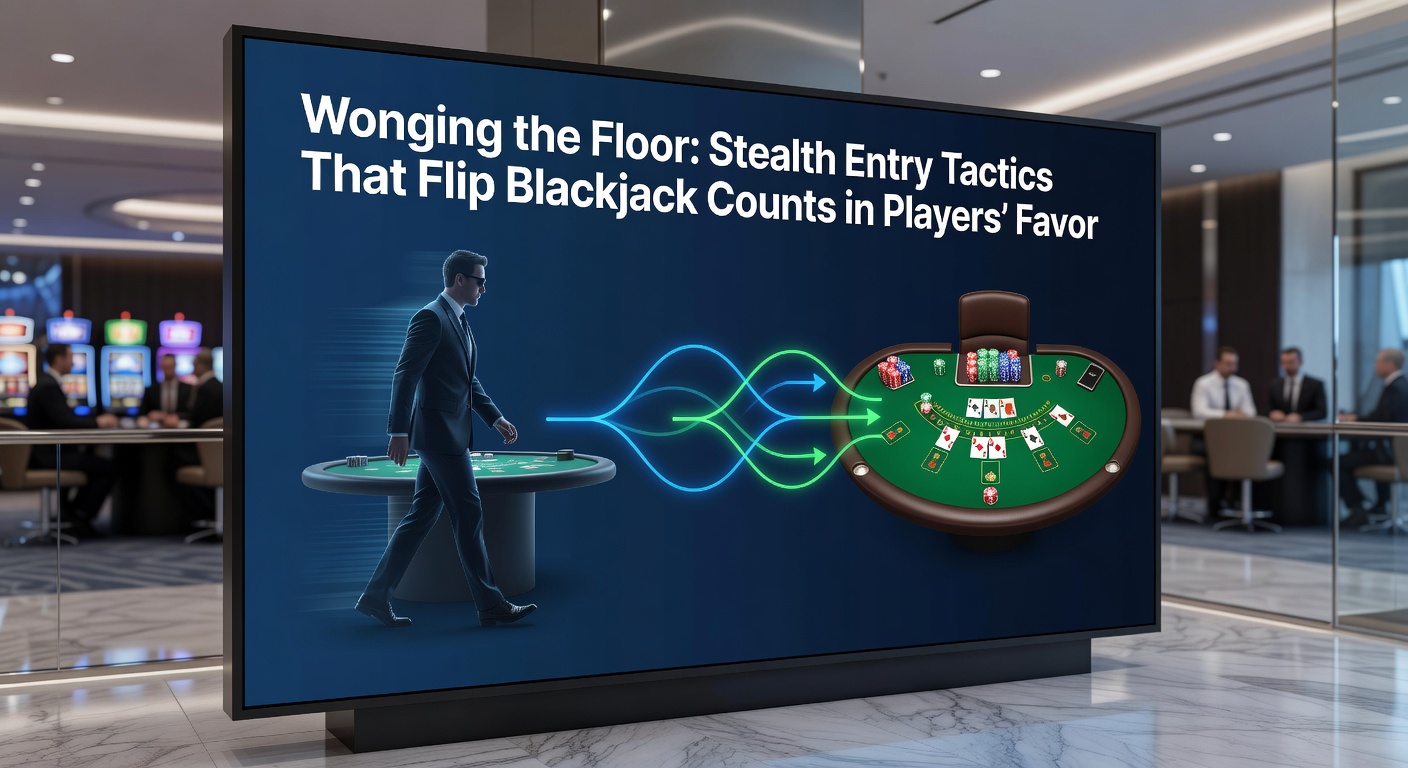
Mathematical Edges and Real-World Simulations
Figures from blackjack software like CVCX reveal Wonging boosts hourly win rates dramatically; a solo counter wonging six-deck shoes at +2 true count entry might pull $50-100 per hour at $25 minimums, scaling with bankroll and spreads, whereas flat betting drags even counts into losses. But simulations account for heat too—casino backs-offs reduce effective play by 20-30% in tracked jurisdictions—prompting Wongers to "wong out" entire floors when barred from one table.
Take one case where researchers modeled a Sydney casino floor using data from the New South Wales Liquor & Gaming Authority; teams wonging 12 tables nightly netted edges akin to full-time play on perfect counts, since they skipped 70% of shoes deemed unprofitable upfront. That's where the rubber meets the road: selective entry turns the floor into a hunting ground, with variance smoothed over volume.
Yet risks loom large; overbetting on hot decks invites scrutiny, and while Wonging skirts illegal cheating—purely using public info—properties invoke trespass laws post-heat, as evidenced in player forums logging ejections from Reno rooms as recent as early 2026. Skilled practitioners mitigate by logging casino responses in apps, steering clear of hot zones like high-limit pits where cameras zoom tighter.
Countermeasures: How Casinos Fight Back
Casinos evolved defenses sharply; "wong-proof" rules like mandatory buy-ins before play or heat-on-wonging protocols spread post-1990s, with Florida rooms leading aggressive no-entry enforcement since state gaming panels mandated shuffle scrutiny. Observers note continuous shufflers neuter the edge entirely by recycling cards instantly, forcing Wongers to shoe games in Vegas locals' joints or Atlantic City holdouts.
So teams adapt with "dissuasion plays"—spotters feign play on bad counts occasionally, or big players tip dealers generously to build goodwill—keeping the operation under radar longer. Data from industry trackers shows wonging viability persists in 2026, especially amid labor shortages stretching pit coverage thin on weeknights.
Advanced Tactics: From Floors to Teams and Tech
Advanced Wongers layer in deck estimation for true count precision without sitting out; they gauge remaining decks by peering at the discard tray, converting running counts accurately even from afar, a skill honed through thousands of observed shoes. And while apps tempt with hidden cameras, pros stick to brainpower since devices trigger felony charges under federal wire acts in U.S. venues.
People who've run floor ops often pair Wonging with hole carding or shuffle tracking when opportunities arise, but core stealth remains king; varying disguises nightly—switching from dad vibes to business traveler—combined with non-gambling breaks at buffets resets surveillance logs. One study from Canadian gaming researchers highlighted how cross-border Wongers exploit rule variances, hitting U.S. deep-penetration games then Canadian six-deckers for balanced action.
Here's where it gets interesting: as of March 2026, reports from European casino associations detail rising wonging in Brussels and Monte Carlo, where laxer mid-entry norms yield outsized edges versus U.S. clamps; players shuttle via low-cost flights, wonging floors continent-wide for marathon sessions.
Conclusion
Wonging the floor stands as a testament to blackjack's enduring cat-and-mouse dynamic, where sharp-eyed players exploit public card flows to claim edges casinos desperately guard; data underscores its math—selective play on plus counts yields sustainable profits for disciplined teams—yet success pivots on stealth, adaptation, and floor knowledge accumulated over years. Although countermeasures proliferate, from shuffle machines to AI surveillance, pockets of opportunity linger in rule-friendly rooms worldwide, keeping the tactic viable into 2026 and beyond. Those eyeing it start small, master counts mentally, and treat the floor like chess: every move counts, every exit preserves the game for tomorrow.